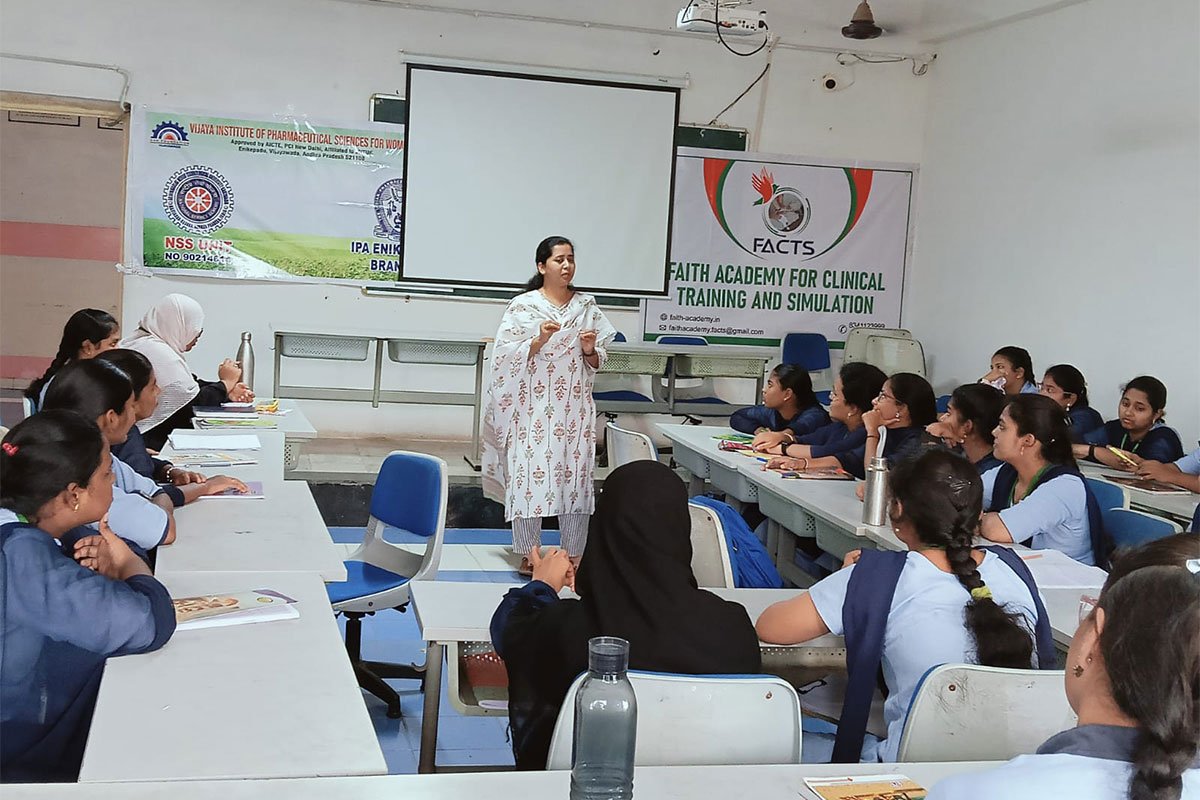
The healthcare sector is evolving rapidly and now demands graduates who are not only academically strong but clinically confident, technologically competent, and emotionally prepared for real-world practice. Employers increasingly seek professionals who can transition seamlessly into clinical roles without extended orientation or training periods. With this expectation in mind, the faith academy simulation program has been built as a powerful educational model that nurtures both competence and professionalism — shaping students into job-ready healthcare providers prepared to deliver safe, high-quality patient care from their very first day in the workforce.
Grounded in evidence-based teaching methodologies and supported by state-of-the-art simulation technology, Faith Academy provides learning experiences that replicate real clinical environments with precision. The program ensures that students do not memorise clinical concepts alone, but truly internalise and apply them in dynamic, unpredictable scenarios similar to those they will encounter in hospitals, emergency departments, and community health settings.
Transforming theoretical knowledge into clinical expertise
One of the most significant barriers to workplace readiness is the gap between classroom learning and real patient care. The faith academy simulation program is designed specifically to close this gap. Through immersive, case-based simulation experiences, students learn to translate textbook knowledge into:
- accurate patient assessment
- timely clinical judgment
- evidence-based interventions
This transition from “conceptual understanding” to “clinical execution” empowers students to approach their first job postings — whether during internships or professional employment — with clarity, confidence, and competence.
Mastery of essential and high-demand clinical procedures
Modern healthcare facilities expect new graduates to perform core and advanced clinical procedures with precision. At Faith Academy, students train repeatedly using high-fidelity manikins and specialised task trainers to master indispensable skills, including:
- cardiopulmonary resuscitation and advanced life support
- IV cannulation and medication administration
- airway management and intubation
- neonatal and pediatric resuscitation
- postpartum and obstetric emergency care
- trauma assessment and wound management
By practicing these procedures in lifelike scenarios, learners develop muscle memory, procedural accuracy, and speed — qualities that significantly increase employability and workplace performance.
Cultivating critical thinking and rapid decision-making
Healthcare practice frequently involves complex and time-sensitive situations in which the wrong decision can compromise patient safety. Simulation exercises at Faith Academy present students with evolving emergency scenarios — such as shock, sepsis, stroke, cardiac arrest, postpartum hemorrhage, or multi-system trauma — requiring them to:
- prioritize actions
- interpret fluctuating vital signs
- weigh risks and outcomes
- modify care plans in real time
This repeated exposure sharpens clinical reasoning, situational awareness, and analytical thinking, positioning students to make sound decisions under pressure — a characteristic that employers highly value.
Developing leadership, teamwork, and professional communication
Success in healthcare is not defined by clinical skill alone; effective collaboration and communication are equally critical. Faith Academy reinforces these competencies through interprofessional simulation models, where students function as multidisciplinary teams. Each learner practices:
- leading and coordinating during emergencies
- communicating concisely under time pressure
- giving and receiving instructions professionally
- conducting SBAR-based handovers
- documenting and reporting accurately
These experiences build confidence, empathy, and mutual respect — soft skills that deeply influence workplace harmony and patient outcomes.
Technological fluency for modern healthcare environments
Today’s healthcare systems are technology-driven. The faith academy simulation program integrates advanced medical and digital tools, ensuring learners are familiar with:
- patient monitoring systems
- ventilators and oxygen delivery devices
- defibrillators and infusion pumps
- electronic health record systems
- virtual and augmented reality-based learning modules
By the time they graduate, students possess strong technological agility, adapting hospital equipment and digital workflows remarkably smoothly.
Building emotional resilience and professional maturity
Clinical emergencies can be emotionally intense and psychologically demanding. The simulation program prepares learners not only technically, but also emotionally. High-stress scenarios require students to manage:
- sudden patient deterioration
- complex prioritization
- distressed family situations
- uncertain prognoses
With expert faculty support, students develop composure, empathy, and resilience. This emotional readiness becomes a crucial determinant of long-term career sustainability and professional excellence.
Structured feedback and reflective practice for continuous growth
Every simulation experience concludes with a structured debriefing session, enabling students to analyse their performance in a safe, supportive space. They evaluate:
- strengths in procedural skills and decision-making
- gaps in knowledge or technique
- impact of communication and teamwork on outcomes
- alternative approaches for improved care
This cycle of action, reflection, and refinement develops a mindset of accountability and lifelong learning, mirroring the professional expectations of real healthcare institutions.
Strengthening employability and global career prospects
Graduates of the faith academy simulation program perform exceptionally well in:
- practical skill evaluations
- objective structured clinical examinations (osces)
- demonstration-based interviews
- institutional skill trials
- international licensing and competency assessments
Their ability to demonstrate hands-on clinical competence, teamwork, composure, and patient-centered communication directly contributes to higher job selection rates and faster workplace adaptation both in India and abroad